
Museum »
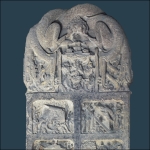
At 302 centimeters high, 97 centimeters wide, the tablet was originally engraved in 691 AD for Dayun Temple. The temple has been destroyed long time ago in the history. This stone tablet survived and was collected in 1957. Revolving around the key subject of Nirvana, there are six different stories carved on this stone tablet.
Music »

Kang Ding Love Song is one of the most popular Chinese folk songs. Its simple melody and vivid rhythm are easy to remember and sing, and its lyrics tell a timeless theme — LOVE.
Behind this famous folk song, there are two stories. One is inside the music – how it was written; the other is outside the music, how it became well-known. Let’s me tell them one by one.
Chengyu »
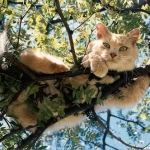
Cats are our friends. In China, we think cat is the teacher of other cats such as tiger. Why? Because cat can do what tiger cannot do: climbing a tree.
The other thing that always puzzles me about domestic cats is that they like eating fish. How could they have evolved to like eating fish while they cannot catch it? I know there are special specie called “fishing cat”, but I think most domestic cats don’t know how to catch fish. Maybe you readers can help me out.
Museum »
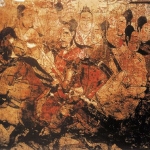
The murals are divided into two parts:
On the walls of ramp, the lower section of walls of courtyard, corridor, and main chamber, the paintings illustrate Lou Rui’s military career and life scenes before his death;
On the upper walls of corridor, courtyard, chambers and gates, those paintings depict the illusory fantasy in which the tomb owner ascended to heaven and returned to the Western Pure Land after death.
Carnival »

Welcome to the August 19, 2010 edition of china carnival. We have seven submissions this time. Actually Athena Goodlight submitted four posts but I could only take two for one carnival. Thank her and everyone for your enthusiastic participation. Enjoy the posts!
Who Am I?
 Yi Liu
 a postdoctoral researcher
living in Los Angeles, California.
About Me


